
Les meilleures marques de café canadiennes : 12 torréfacteurs indépendants à essayer en 2026
Dernière mise à jour :

Vous cherchez les meilleures marques de café canadiennes pour remplir votre tasse le matin? Vous êtes en bonne compagnie. Le café fait partie du rituel quotidien de millions de Canadiens, et de plus en plus d'entre nous souhaitent que ce rituel appuie des entreprises établies ici, chez nous.
Ce guide présente 12 torréfacteurs indépendants canadiens qui valent le détour, de la Colombie-Britannique à l'Île-du-Prince-Édouard. Vous découvrirez où chacun est établi, ce qui le rend remarquable, et comment reconnaître une marque véritablement détenue par des Canadiens. Nous aborderons aussi les bases de la torréfaction, l'approvisionnement éthique et où faire vos achats.
Commençons par une question simple qui déroute bien des consommateurs.
Qu'est-ce qui rend une marque de café canadienne?
Une marque de café canadienne est une entreprise qui est détenue et exploitée au Canada. Comme les caféiers ont besoin d'un climat tropical, ces marques importent des grains verts (non torréfiés) de régions productrices et les torréfient ici, chez nous.
Cela signifie que le mot « canadien » concerne la propriété et la torréfaction, pas la culture. Il est utile de bien distinguer trois étiquettes :
- Propriété canadienne : L'entreprise et sa société mère sont basées au Canada, donc les profits restent dans les communautés canadiennes.
- Torréfié au Canada : Les grains sont torréfiés ici, mais la marque peut appartenir à une société mère étrangère.
- Propriété étrangère : La marque peut sembler locale, mais les profits vont à des propriétaires à l'extérieur du Canada.
Cette distinction compte pour beaucoup de gens. Le café est resté la boisson la plus consommée au Canada en 2025, avec 71 % des Canadiens qui affirment avoir bu une boisson au café la veille, selon l'Association du café du Canada. Quand quelque chose est aussi populaire, l'endroit où on dépense son argent finit par avoir un réel impact.
Pourquoi les Canadiens achètent du café canadien en ce moment
L'intérêt pour les marques appartenant à des Canadiens a explosé en 2025. Une vague de tensions commerciales a poussé les consommateurs à repenser où va leur argent, et le café a fait partie de ce changement.
Les chiffres sont frappants. Un sondage d'Angus Reid a révélé que 85 % des Canadiens affirment avoir déjà remplacé des produits américains ou prévoient le faire, et 78 % s'engagent à acheter davantage de produits canadiens en général.
Ça ressemble à une habitude durable, pas à une tendance passagère. Une étude d'Ipsos a révélé que parmi les Canadiens ayant modifié leurs habitudes d'achat en raison des tensions entre le Canada et les États-Unis, 82 % disent qu'ils continueront d'acheter des produits canadiens même après la fin de la crise.
Point clé : Choisir un café appartenant à des Canadiens permet de garder plus d'argent en circulation dans les communautés locales et soutient les artisans indépendants plutôt que les géants mondiaux.
Les meilleures marques de café canadiennes à essayer en 2026
Prêt à magasiner? Voici 12 torréfacteurs canadiens indépendants, répartis partout au pays, ainsi qu'un tableau récapitulatif pour les comparer d'un coup d'œil.
| Marque | Emplacement | Réputé pour |
|---|---|---|
| Phil & Sebastian | Calgary, AB | Cafés à origine unique primés et soigneusement sélectionnés |
| Monogram Coffee | Calgary, AB | Pedigree de championnat de barista |
| 49th Parallel Coffee Roasters | Vancouver, BC | Approvisionnement direct auprès des fermes; gère aussi Lucky's Doughnuts |
| Pilot Coffee Roasters | Toronto, ON | Torréfaction carboneutre; abonnements solides |
| Detour Coffee Roasters | Hamilton, ON | Mélanges espresso et filtre accessibles |
| Balzac's Coffee Roasters | Ontario | Mélanges de café d'inspiration européenne |
| De Mello / Hatch | Toronto, ON | Cafés à origine unique vifs et expressifs |
| Barren Ground Coffee | Yellowknife, NWT | Torréfacteur nordique livrant partout au pays |
| PEI Coffee Merchant | North Milton, PEI | Torréfactions moyennes et foncées, propriété atlantique |
| Eclipse Coffee Roasters | Canmore, AB | Mélange espresso chocolat-caramel |
Phil & Sebastian (Calgary, AB)
Phil & Sebastian est un torréfacteur spécialisé primé de Calgary. L'équipe est reconnue pour ses cafés à origine unique soigneusement sélectionnés et son approche réfléchie de la qualité.
Si vous voulez goûter à ce que le café de spécialité canadien peut offrir, c'est un excellent point de départ.
Monogram Coffee (Calgary, AB)
Également basé à Calgary, Monogram possède un pedigree de championnat de barista et une longue liste de titres de compétition. C'est l'une des équipes les plus décorées du café de spécialité canadien.
Attendez-vous à des torréfactions nettes et précises, conçues pour les personnes qui aiment peaufiner leur tasse.
49th Parallel Coffee Roasters (Vancouver, BC)
49th Parallel est un torréfacteur établi de longue date en Colombie-Britannique, reconnu pour son approvisionnement direct auprès des fermes. Cela signifie qu'il établit des relations directes avec les fermes qui cultivent ses grains.
Fait amusant : la même équipe gère aussi Lucky's Doughnuts, un accord naturel avec un bon café.
Pilot Coffee Roasters (Toronto, ON)
Pilot a contribué à mettre la scène du café de spécialité de Toronto sur la carte. Ce torréfacteur est reconnu pour sa torréfaction carboneutre et son solide programme d'abonnement.
Si l'idée de recevoir des grains fraîchement torréfiés selon un horaire vous plaît, Pilot vous facilite la tâche.
Detour Coffee Roasters (Hamilton, ON)
Detour, basé à Hamilton, est un torréfacteur spécialisé accessible. C'est un bon choix si les cafés vifs et techniques vous semblent intimidants.
Ses mélanges espresso et filtre sont des choix populaires qui conviennent à la consommation de tous les jours.
Balzac's Coffee Roasters (Ontario)
Balzac's est un torréfacteur ontarien à l'ambiance inspirée de l'Europe. Ses mélanges misent sur des saveurs réconfortantes et familières.
Si vous aimez une tasse au style café classique, Balzac's mérite le détour.
De Mello et Hatch (Toronto, ON)
De Mello et Hatch sont deux torréfacteurs spécialisés réputés de Toronto. Tous deux sont reconnus pour leurs cafés d'origine unique, vifs et expressifs.
Ce sont d'excellents choix quand vous voulez découvrir des cafés plus légers et fruités.
Barren Ground Coffee (Yellowknife, T.N.-O.)
Barren Ground prouve que le bon café canadien ne se limite pas aux grandes villes. Basée à Yellowknife, l'entreprise porte fièrement les couleurs du Nord et livre partout au pays.
C'est un rappel que les torréfacteurs indépendants prospèrent partout au pays.
PEI Coffee Merchant (North Milton, Î.-P.-É.)
PEI Coffee Merchant fait entrer le Canada atlantique dans le jeu. Cette entreprise appartenant à l'Île-du-Prince-Édouard torréfie des options moyennes et foncées comme son Confederation Blend et son French Roast.
Vous pouvez commander son café de l'Île-du-Prince-Édouard en ligne, ce qui rend simple le soutien à un producteur insulaire.
Eclipse Coffee Roasters (Canmore, AB)
Eclipse est un torréfacteur de café établi dans la ville de montagne de Canmore, en Alberta, fondé en 2014. Son mélange « Vintage » mise sur des notes de chocolat et de caramel.
Essayez le mélange espresso de l'Alberta si vous aimez un espresso riche et réconfortant.
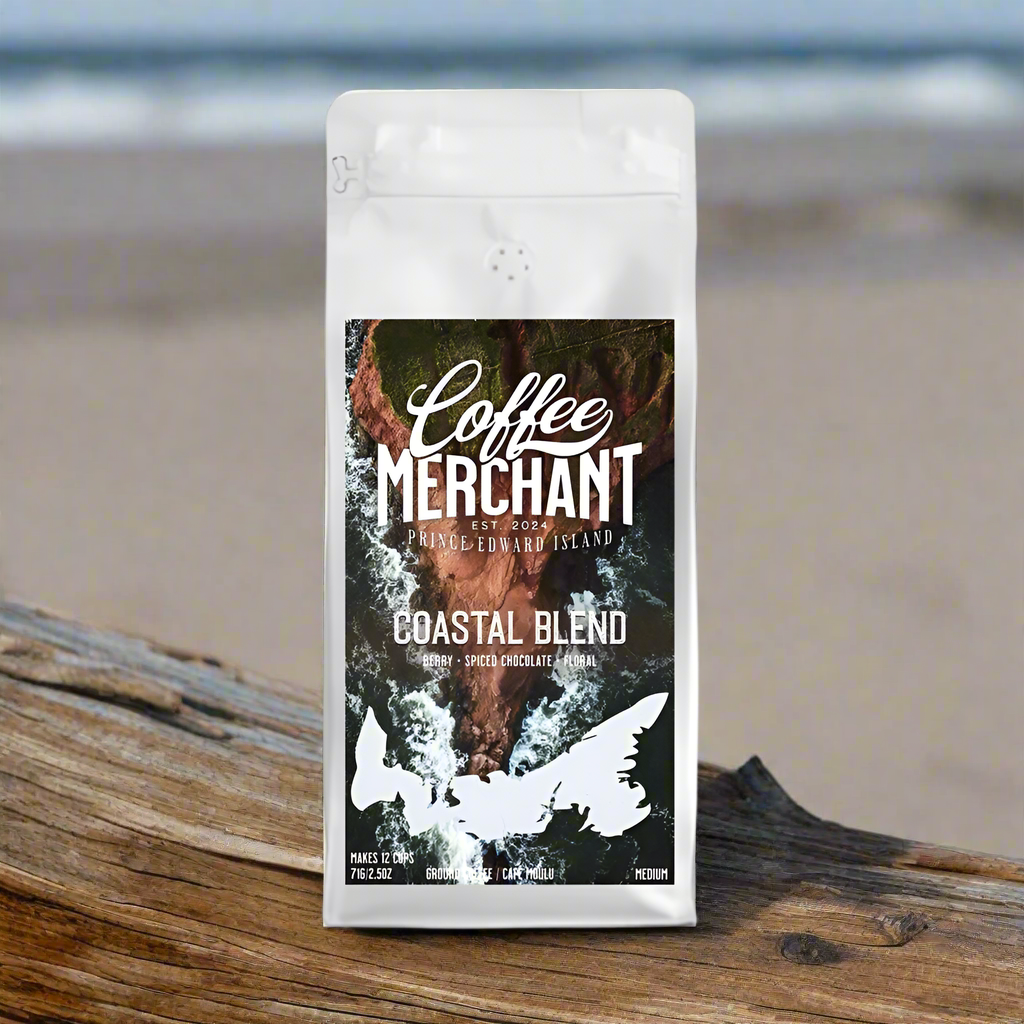
Common Goods Coastal Blend (marché Common Goods)
Le mélange Coastal Blend maison de Common Goods est une porte d'entrée accessible pour les nouveaux acheteurs. Il s'agit d'une torréfaction moyenne d'origine unique provenant de la région de Guji, en Éthiopie.
Attendez-vous à des notes de fruits des champs, de chocolat épicé et une finale florale, le tout dans une tasse facile à aimer.
Comment savoir si une marque de café appartient vraiment à des intérêts canadiens
Une marque peut sembler canadienne tout en envoyant ses profits à l'étranger. Voici une liste de vérification rapide pour vous aider à confirmer la propriété avant d'acheter :
- Vérifiez la société mère. Renseignez-vous sur qui possède la marque, pas seulement sur l'endroit où elle est torréfiée.
- Lisez l'étiquette. « Produit du Canada » et « torréfié au Canada » ne veulent pas dire que l'entreprise appartient à des intérêts canadiens.
- Surveillez les acquisitions. Les marques locales bien-aimées sont parfois rachetées par de plus grandes entreprises multinationales.
- Recherchez la transparence. Les marques véritablement locales ont tendance à être ouvertes sur leur propriété.
Tim Hortons est l'exemple le plus évident d'une marque que plusieurs croient être canadienne et indépendante. En réalité, son dépôt réglementaire sur la propriété de l'entreprise confirme que Tim Hortons appartient à Restaurant Brands International (RBI), une multinationale cotée en bourse (NYSE : QSR) qui possède également Burger King, Popeyes et Firehouse Subs.
Point clé : Une place de marché vérifiée élimine les incertitudes en confirmant la propriété pour vous, afin que vous puissiez magasiner en toute confiance.
Comprendre les niveaux de torréfaction, les mélanges et les cafés à origine unique
Quelques notions de base facilitent grandement le choix d'un sac que vous allez apprécier. Le niveau de torréfaction est la première chose à connaître.
- Torréfaction légère : Plus vive et acidulée, avec des notes fruitées et florales.
- Torréfaction moyenne : Équilibrée et douce, un choix sûr pour la plupart des gens.
- Torréfaction foncée : Corsée et riche, avec des saveurs chocolatées et grillées.
Vient ensuite la provenance. Un café à origine unique provient d'un seul endroit, ce qui met en valeur les saveurs distinctes de cette région, tandis qu'un mélange combine différents grains pour créer une tasse constante et équilibrée.
Enfin, pensez au style de préparation. Les mélanges espresso sont conçus pour des shots concentrés, tandis que le café filtre est fait pour une extraction plus longue et plus douce. Une torréfaction moyenne bien équilibrée demeure un bon point de départ dans les deux cas.
Café canadien éthique, équitable et biologique
Beaucoup de consommateurs canadiens souhaitent que leur café soit à la fois éthique et local. Deux certifications aident à s'y retrouver. Le commerce équitable signifie que les producteurs reçoivent des prix plus justes et de meilleures conditions, tandis que le bio signifie que les grains sont cultivés sans pesticides synthétiques.
La demande pour ces valeurs est clairement en croissance. Selon un rapport de Fairtrade Canada, en 2025, les marques de café certifiées Fairtrade ont connu une croissance de 17 % en volume et de 32 % en valeur, tandis que le marché canadien du café dans son ensemble a reculé de 4 % en volume.
Plusieurs torréfacteurs canadiens sont des chefs de file en approvisionnement éthique, alors on n'a rarement à choisir entre local et responsable.
Préparer un excellent café canadien à la maison
De bons grains méritent de bon équipement, et quelques outils simples améliorent presque tous les cafés. Un moulin à meules offre une mouture uniforme, et une bouilloire à col de cygne aide à verser l'eau avec précision.
Une balance de cuisine assure des mesures constantes, et une cafetière à filtre ou une presse française vous permet de préparer votre café avec précision. Vous pouvez aussi vous procurer de l'équipement de préparation de café canadien auprès de fournisseurs canadiens, pour que même votre matériel soutienne l'économie locale.
Le Canada possède aussi une véritable industrie du café qui mérite d'être encouragée. Selon les données de Statistique Canada, le secteur de la fabrication de café et de thé au Canada a généré des revenus de 3,1 milliards de dollars en 2023, une hausse de 8 % par rapport à 2022.
Où acheter des marques de café canadiennes en ligne
Vous avez deux bonnes options. Vous pouvez commander directement sur le site web de chaque torréfacteur, ou vous pouvez magasiner les marques de café canadiennes de plusieurs artisans indépendants au même endroit.
Un marché vérifié vous fait gagner du temps et élimine les incertitudes sur la propriété des marques. Chaque marque est confirmée comme étant détenue par des intérêts canadiens, et les commandes de plus de 140 $ sont livrées gratuitement.
Questions fréquentes
Quelle est la marque de café canadienne la plus populaire?
Kicking Horse est l'une des marques de café canadiennes les plus connues à l'échelle nationale (même si elle n'appartient plus à des intérêts canadiens depuis son achat par Lavazza en 2017), tandis que Tim Hortons est le nom de café le plus reconnu au Canada, mais appartient à une multinationale.
Tim Hortons est-elle une entreprise canadienne?
Non. Tim Hortons a été fondé au Canada, mais l'entreprise appartient maintenant à Restaurant Brands International, une multinationale cotée en bourse, donc elle n'est plus indépendamment détenue par des intérêts canadiens aujourd'hui.
Quel est le meilleur café canadien pour les débutants?
Une torréfaction moyenne bien équilibrée, qu'elle soit d'origine unique ou en mélange, est le point de départ le plus facile et le plus indulgent pour les nouveaux amateurs de café.
Où puis-je acheter des marques de café canadiennes en ligne?
Vous pouvez commander directement sur le site web d'un torréfacteur ou utiliser un marché canadien vérifié qui regroupe plusieurs marques indépendantes au même endroit.
Le café canadien est-il cultivé au Canada?
Non — les plants de café ont besoin d'un climat tropical, alors les marques canadiennes importent les grains verts et les torréfient ici, chez nous.
Encouragez le local à chaque tasse
Passer au café canadien est l'une des façons les plus simples de garder votre argent dans les communautés locales. Magasinez plus de 400 marques canadiennes vérifiées chez Common Goods, un marché de marques canadiennes vérifiées avec livraison gratuite sur les commandes de plus de 140 $.
Obtenez la liste complète
Abonnez-vous pour accéder à notre répertoire de plus de 350 marques canadiennes.
Parcourez par produit, province, durabilité et plus encore.
Découvrez Café et thé

Thé noir à l'érable
$4.00
Thé noir à l'érable
$4.00