
Canadian coffee brands: what makes them Canadian, who roasts them, and how to choose
Last updated:

Canadians love their coffee, and plenty of us want our morning cup to support businesses close to home. The catch is that a maple leaf on the bag doesn't tell you who owns the brand or where the beans were roasted.
In this guide, you'll learn what makes Canadian coffee brands Canadian and meet a few examples, including a household name and two independent brands. You'll also learn how to read coffee labels, choose a brand that fits your values, and store your beans. We finish with answers to common questions.
What is a Canadian coffee brand?
A Canadian coffee brand is a coffee company that is Canadian-owned and has its coffee roasted in Canada. As the Canadian Food Inspection Agency (CFIA) notes, coffee beans are always imported. That means "Canadian" describes who owns the business and where the beans are roasted, rather than where they were grown.
Labels reflect this reality because the beans are always imported. The CFIA guide to Canadian food from the Canadian Food Inspection Agency lists "Roasted and blended in Canada" as an example claim for coffee.
To figure out whether coffee brands in Canada are truly Canadian, ask three separate questions:
- Who owns it: A brand can be roasted or incorporated here and still have its main office somewhere else.
- Where it's roasted: Roasting is the step that happens in Canada, so look for the roasting location on the bag or website.
- How it's sourced: Certifications such as organic or Fairtrade describe how beans were grown or bought.
A red-and-white bag or a maple leaf alone doesn't answer any of these questions. Look past the design and check the details.
At Common Goods, we focus on ownership because it decides where the profits go. When you buy from a Canadian-owned company, more of your money stays in Canadian communities. That's why every seller on Common Goods is verified Canadian-owned.
Canadian coffee brand examples
Canadian coffee companies come in many sizes, and each one handles roasting and ownership differently. Here are three examples worth knowing, each with its own story about roasting, ownership, and impact.
- Tim Hortons: Tim Hortons' own FAQ says its Original Blend served in Canada is roasted in Ancaster, Ont., with 100% Arabica beans.
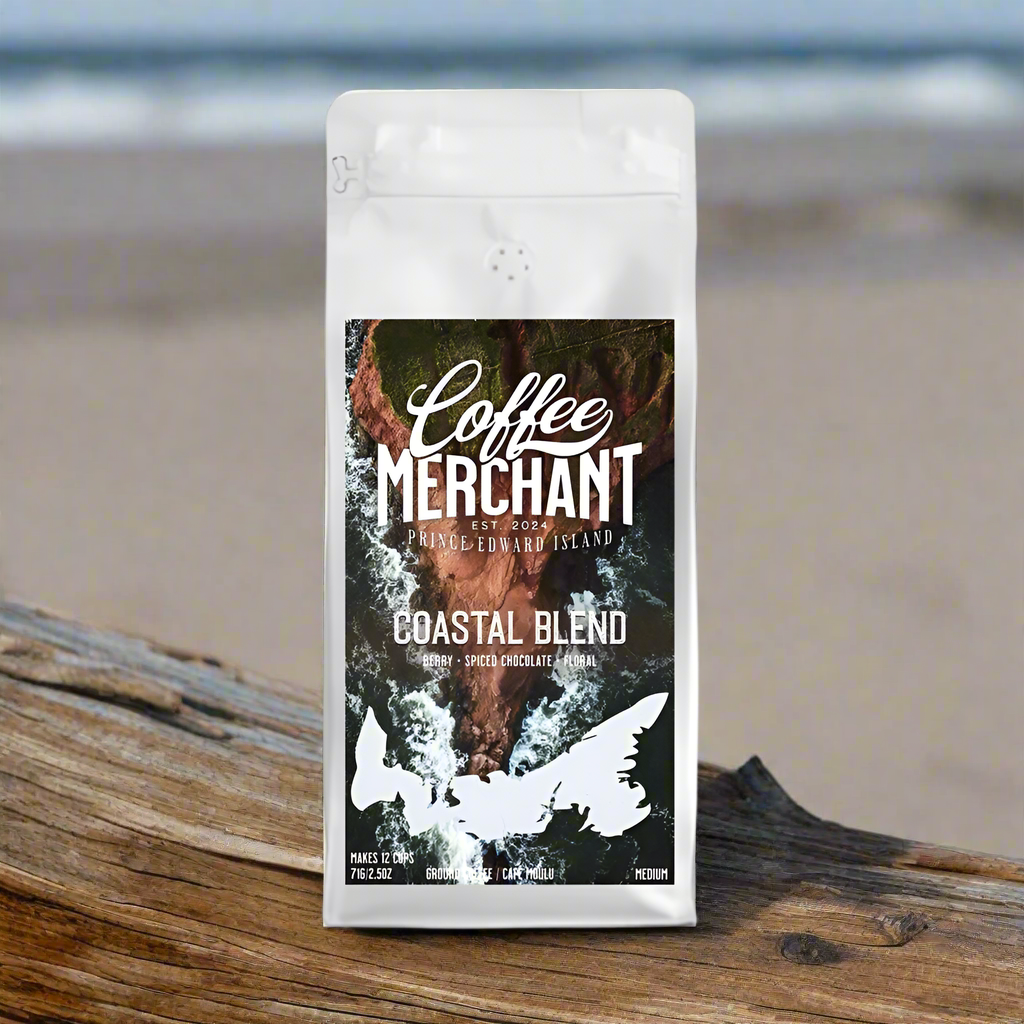
- PEI Coffee Merchant: This PEI-owned coffee company works with an Atlantic Canadian roaster to make PEI Coffee Merchant's Confederation Blend, a medium roast from Cerrado, Brazil.
- Spirit Bear Coffee Company: Founded in 2006, it was called "the first national Indigenous-owned coffee brand" in a 2022 Destination Vancouver profile.
- Independent regional roasters: Many roasters across BC, Ontario, and Atlantic Canada sell direct, so check each brand's own site for ownership and certifications.
Tim Hortons also says 1,500 Canadian owners operate more than 4,000 of its restaurants in Canada. That franchise network is a big part of why the brand feels so Canadian. Ownership of the company itself is a separate question, which we cover in the next section.
PEI Coffee Merchant is our spotlight pick, because it shows what a PEI-owned coffee company working with an Atlantic Canadian roaster brings to your cup. Confederation Blend has notes of toasted hazelnut, dark chocolate, and date. It's named for the 1864 Charlottetown Conference, and you can find it on Common Goods.
According to Spirit Bear Coffee Company, its lineup includes Raven Espresso and Frog Breakfast Blend. In a 2022 profile, Destination Vancouver reported that the company sold "only Fair Trade Certified and Certified Organic coffee."
Is Tim Hortons a Canadian company?
Tim Hortons is run from Toronto, and the company says its Original Blend for Canada is roasted in Ancaster. The brand itself is owned by Restaurant Brands International (RBI).
RBI is incorporated in Canada and trades on the Toronto Stock Exchange (TSX). However, the RBI annual report (10-K) filed by Restaurant Brands International names the New York Stock Exchange (NYSE) as its primary exchange. The same filing lists RBI's principal executive office in Miami, Florida.
So "Canadian brand" and "Canadian-owned" aren't the same thing. Tim Hortons has Canadian roasting and thousands of Canadian franchise owners, but its parent company has its principal executive office in the U.S.
If ownership guides your shopping, that distinction is worth knowing. It won't make a double-double taste any different, but it can help you decide which brands match your priorities.
How Canadians drink coffee
Coffee is a fixture of Canadian routines. In the Coffee Association of Canada study, the Coffee Association of Canada found 71% of Canadian adults reported drinking a coffee beverage the day before.
The association's Winter 2025 data also showed that 45% had a traditional coffee the day before. Another 29% had espresso-based drinks.
With that many cups poured, it makes sense that shoppers want to know who they're buying from. In a Common Goods community survey, 93% of shoppers we surveyed said they would prefer to buy Canadian if given an equally convenient option. Coffee is an easy place to act on that preference, since many of us buy it again and again.
How to read Canadian coffee labels
Coffee labels carry plenty of claims, and each one answers a narrow question. The CFIA guide linked above also notes that the Government of Canada doesn't pre-approve food labels, so it pays to know what each claim means.
- Roasted and blended in Canada: This is CFIA's example claim for coffee, used because the beans are always imported.
- Made in Canada: On food, this claim must include a qualifier, such as "from imported ingredients."
- Organic: The CFIA organic claims rules allow the organic label or logo only on products with at least 95% organic content.
- Fairtrade: Fairtrade International's Fairtrade minimum price update sets a US$2.00-per-pound floor for new washed Arabica contracts from Dec. 1, 2026.
The Canada organic logo doesn't mean the coffee was grown in Canada. The Fairtrade minimum is a price floor, and Fairtrade notes that market prices are currently above it, so the market price applies for now.
| Label claim | What it tells you | What it doesn't tell you |
|---|---|---|
| Roasted and blended in Canada | The beans were roasted and blended here | Who owns the brand or where the beans were grown |
| Made in Canada (with a qualifier) | The last substantial transformation happened in Canada | That the ingredients are Canadian |
| Organic or Canada organic logo | The product has at least 95% organic content | That the coffee was grown or made in Canada |
| Fairtrade | The coffee is certified under a system with a minimum price floor | Who owns the roaster, or what farmers are paid right now |
| Maple leaf or red-and-white design | Nothing, on its own | Ownership, roasting location, or sourcing |
Keep this table handy the next time you compare bags in the coffee aisle or online. If a claim isn't clear, the roaster's own website is the best place to find the details.
How to choose a Canadian coffee brand
The best coffee in Canada is the one that fits your taste and your values. There's no single right answer, so start with what matters most to you. Then work through these five criteria to narrow your options.
- Ownership: Confirm the brand is Canadian-owned on its own site, or shop where every seller is verified.
- Roast preference: Decide whether you like dark, medium, or decaf, since each roaster's lineup is different.
- Values: Look for the certifications or community impact that matter to you, and confirm them with the brand.
- Format and gear: Choose whole bean or ground based on whether you grind at home and what you brew with.
- Where to buy: Buy direct from roasters, or shop many Canadian makers in one place on Common Goods.
If you lean dark, try PEI Coffee Merchant's smoky French Roast, made with beans from Cerrado, Brazil, for a bold, smoky, and smooth cup. If you want decaf, Morning Wharf Decaf is a dark roast with black cherry and dark chocolate notes. It's decaffeinated using the ethyl acetate process.
Your format choice depends on your gear, so think about your grinder and brewer together. If you're upgrading your setup, browse coffee brewing equipment from Canadian-owned sellers.
Our Canadian coffee and tea collection brings together coffee and tea from independent Canadian makers, so your dollars stay closer to home. Shopping for someone else? You can build a Canadian gift box with coffee and other local finds.
How to store coffee from Canadian roasters
Fresh beans from a Canadian roaster deserve good storage. Keep them in an airtight, opaque container in a cool, dark spot. Skip clear canisters on a sunny counter, however nice they look.
The U.S.-based National Coffee Association's National Coffee Association storage guide says roasted beans keep 1–3 weeks at room temperature and 3–4 months frozen. Views on freezing differ, so if you freeze your beans, use a truly airtight container.
The simplest fix is to buy smaller bags more often, so fewer beans sit around waiting. A local roaster makes that easy, and you'll brew fresher coffee while supporting a business near you.
Frequently asked questions about Canadian coffee brands
Here are quick answers to common questions about Canadian coffee brands.
What are the top Canadian coffee brands?
Tim Hortons says 1,500 Canadian owners operate more than 4,000 of its restaurants in Canada. Other options include Spirit Bear Coffee Company and PEI Coffee Merchant, a PEI-owned coffee company that works with an Atlantic Canadian roaster.
Is Tim Hortons coffee made in Canada?
Tim Hortons says its Original Blend served in Canada is roasted in Ancaster, Ont. The green beans are imported, as they are for all coffee roasted in Canada.
Are there Indigenous-owned coffee brands in Canada?
In 2022, Destination Vancouver described Spirit Bear Coffee Company, founded in 2006, as "the first national Indigenous-owned coffee brand." It reported the brand was sold in over 600 locations across Canada.
Can I freeze coffee beans to keep them fresh?
Yes, as long as you use a truly airtight container. The National Coffee Association lists roasted beans as keeping about 3–4 months frozen.
Where can I buy Canadian coffee online?
You can buy direct from roasters or find independent Canadian brands in one place on Common Goods. Shop 400+ Canadian brands at Common Goods.
Get The Full List
Subscribe to access our directory of 350+ Canadian brands.
Browse by product, province, sustainability & more.
Shop Coffee & Tea

Maple Black Tea
$4.00
Maple Black Tea
$4.00